The Trawler’s Alterations
The ShardsThe Trawler’s Alterations are the transformations of victims’ bodies described in excerpts from a letter published by the Los Angeles Times. The letter calls them “the alterations,” “the remakings,” and “the assemblage,” presenting the murders not as isolated acts but as the culmination of a repeated, structured project. Its partial disclosures connect that project to the earlier home invasions and animal disappearances, while the newspaper’s omissions leave the exact results of the alterations uncertain.
The Letter and Its Vocabulary
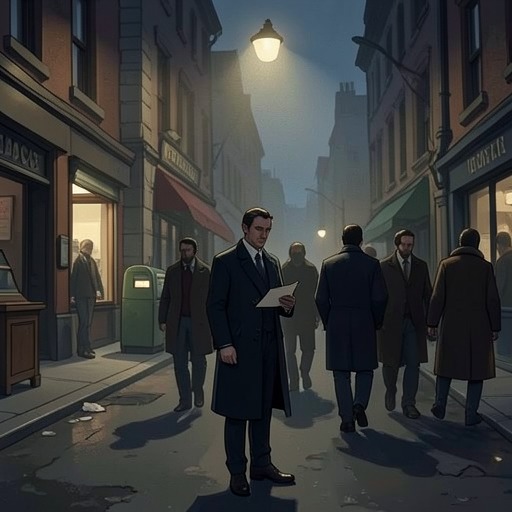
The account reaches the narrator through a newspaper article that reproduces parts of the Trawler’s letter, some typed and redacted, others handwritten in different-colored pens. The Trawler refers to young women’s bodies as “paradises,” intended for “the God,” and says they are needed to display the alterations. He describes his practice as predating his arrival in Los Angeles, calling the city another step in a continuing sequence. These are the letter’s claims, presented through the narrator’s reading of the published excerpts rather than independent confirmation of the Trawler’s history or beliefs.
The article withholds the precise nature of the alterations and does not list the materials used. It does, however, relay references to buckets of bleach, a hacksaw that had become dull, and a collection of Polaroids. The narrator is left to infer what those details might mean; the article does not verify those inferences. This gap between suggestive evidence and withheld explanation is central to the concept: the reader encounters the project through fragments that make its organization legible without fully revealing its physical outcome.
A Repeated Sequence of Selection and Preparation
The letter places the alterations inside a larger sequence. The Trawler describes traveling at night, choosing neighborhoods and houses, and assessing prospective victims. He says he and his companions watched young women in public places, including streets, shopping-center food courts, and beach parking lots, seeking someone they considered suitable. The account distinguishes victims chosen for the ritual from people physically attacked during the home-invasion campaign: the Trawler says he had not sacrificed a target he had attacked in that way.
Between murders, according to the letter, the Trawler resumed the home invasions, which he called “rearrangements” and described as tests of a target’s suitability. The broader pattern included repeated surveillance, the selection of a residence and a teenager who lived there, and the search for animals. Earlier evidence of missing pets and neighborhood animals thus acquires a new, retrospective connection to the killings. The Trawler presents waiting, following people, and carrying out rituals as parts of a structured narrative that helped distract him from psychological pain and keep his paranoia under control.
The letter also describes a sequence within the killings themselves, including attacks on victims and the later work of alteration. It says the process could take as long as a week. The published excerpts refer to recorded screams and to actions intended to silence victims and prevent them from seeing the perpetrators, but they do not establish that the same details applied to every case. The distinction between the home invasions, the selection of targets, and the later murders matters: the letter describes connected stages, not one undifferentiated crime.
What the Account Establishes—and Withholds
The newspaper’s publication gives the narrator a framework for understanding earlier clues, but it does not resolve every disappearance or establish the identities of all victims. The article contains no confirmed information about Audrey Barbour and makes no mention of Matt Kellner or male victims. Its silence prevents the narrator from fitting those cases into the Trawler’s account, even as the letter’s language encourages him to see a wider pattern.
A separate clue involving Matt strengthens the narrator’s suspicion without explaining the connection. In Matt’s cleaned-out room, he finds a phone number marked “RM,” which he identifies as Robert Mallory, and takes the note. Later, after hearing from Abigail Mallory that Robert had left no poster for Katherine Latchford, he recognizes that the Foreigner 4 poster associated with Matt belongs to a larger narrative. He knows Matt is connected, but does not know how. These clues do not establish that Matt was one of the Trawler’s victims or that the letter’s account explains his death; instead, they expose the limits of the published narrative and the narrator’s still-incomplete investigation.
Narrative and Thematic Significance
The alterations make the Trawler’s violence legible as a self-conscious project: he describes repeated steps, assigns names to them, and frames them as a story that can be continued. The narrator, in turn, reads the article as a revelation of hidden order, even though its redactions and omissions leave essential facts unresolved. The contrast between the Trawler’s claimed structure and the newspaper’s partial record keeps the concept suspended between evidence and interpretation.
That uncertainty is also shaped by the media through which the clues arrive. A newspaper turns excerpts from a private letter into public evidence, while Matt’s handwritten phone-number note offers a separate, fragile link among people and events. Neither medium supplies a complete account. The alterations therefore signify both the Trawler’s attempt to impose a repeatable form on his crimes and the narrator’s effort to assemble a coherent explanation from incomplete records; the distinction between what is reported, what is inferred, and what remains unknown is never erased.